
 Image 1 of 1
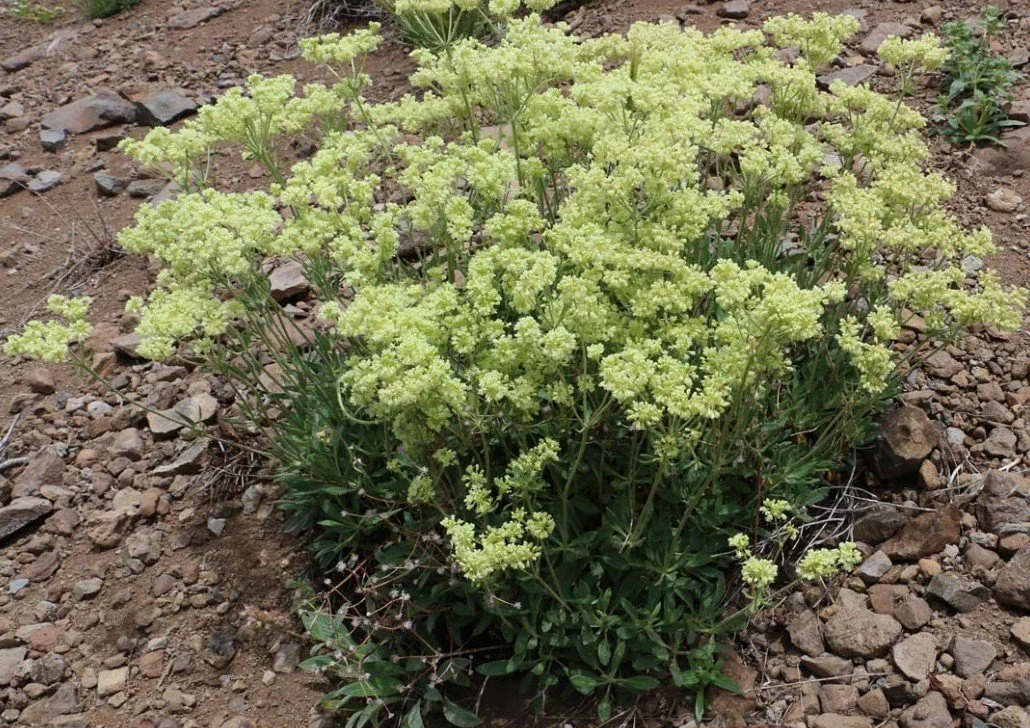
Parsnip Buckwheat forms upright clumps with woolly gray leaves, topped by frothy umbels of creamy-white flowers in early summer. As the blooms age, they turn rust-colored, extending its season of interest and feeding native pollinators.
Water Needs: Very low; thrives on dry slopes
Sun Needs: Full sun
Soil Requirements: Well-drained, rocky or sandy soils
Growing Zone: USDA Zones 4–9
Cold Hardiness: Down to ~–30°F (–34°C)
Mature Size: 12–24 in tall x 18–24 in wide
Native Origin: Intermountain West and Pacific Northwest, USA
Best Substitutes For: Yarrow, Penstemon strictus
Landscape Uses: Xeric borders, native meadows, erosion control
Parsnip Buckwheat forms upright clumps with woolly gray leaves, topped by frothy umbels of creamy-white flowers in early summer. As the blooms age, they turn rust-colored, extending its season of interest and feeding native pollinators.
Water Needs: Very low; thrives on dry slopes
Sun Needs: Full sun
Soil Requirements: Well-drained, rocky or sandy soils
Growing Zone: USDA Zones 4–9
Cold Hardiness: Down to ~–30°F (–34°C)
Mature Size: 12–24 in tall x 18–24 in wide
Native Origin: Intermountain West and Pacific Northwest, USA
Best Substitutes For: Yarrow, Penstemon strictus
Landscape Uses: Xeric borders, native meadows, erosion control