
 Image 1 of 1
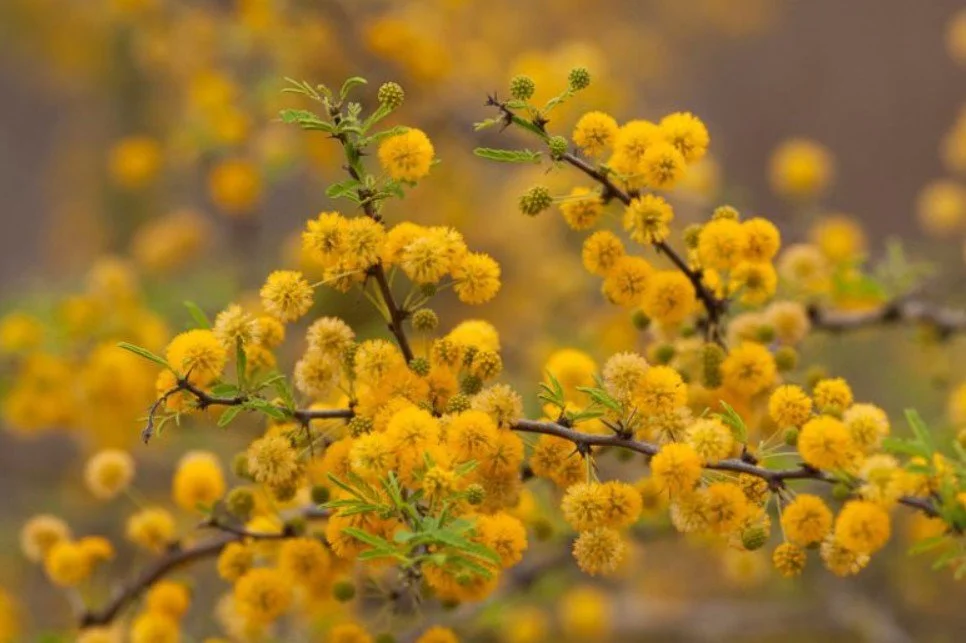
Sweet Acacia greets spring with golden pompoms that look like drops of sunshine strung across its branches. Their sweet, heady fragrance carries on the breeze, turning any corner of the garden into a desert perfume house. With its fine, feathery foliage and elegant branching, this small tree is equal parts delicate and durable — a desert jewel with a sweet secret.
Water Needs: Low; thrives with deep, occasional watering once established
Sun Needs: Full sun
Soil Requirements: Well-drained soils; tolerant of sandy, rocky, or caliche soils
Growing Zone: USDA Zones 8–11
Cold Hardiness: Down to ~20°F (−6°C)
Mature Size: 15–25 ft tall x 15–20 ft wide (small ornamental tree)
Native Origin: Southwestern U.S., Mexico, Central and South America
Best Substitutes For: Palo Verde (Parkinsonia), Mesquite (Prosopis), Desert Willow (Chilopsis linearis)
Landscape Uses: Small ornamental tree, desert courtyard accent, fragrant garden focal point, wildlife/pollinator gardens
Sweet Acacia greets spring with golden pompoms that look like drops of sunshine strung across its branches. Their sweet, heady fragrance carries on the breeze, turning any corner of the garden into a desert perfume house. With its fine, feathery foliage and elegant branching, this small tree is equal parts delicate and durable — a desert jewel with a sweet secret.
Water Needs: Low; thrives with deep, occasional watering once established
Sun Needs: Full sun
Soil Requirements: Well-drained soils; tolerant of sandy, rocky, or caliche soils
Growing Zone: USDA Zones 8–11
Cold Hardiness: Down to ~20°F (−6°C)
Mature Size: 15–25 ft tall x 15–20 ft wide (small ornamental tree)
Native Origin: Southwestern U.S., Mexico, Central and South America
Best Substitutes For: Palo Verde (Parkinsonia), Mesquite (Prosopis), Desert Willow (Chilopsis linearis)
Landscape Uses: Small ornamental tree, desert courtyard accent, fragrant garden focal point, wildlife/pollinator gardens